
Departure
UTD's summer research class taught machine learning the long way — model architectures, use cases, a detour through reinforcement learning — and ended on a single brief: pick a thing and train a CNN on it. Deep-fake detection picked itself. GAN portraits and InsightFace face-swaps were already trivial to generate, but no one in the room had a binary classifier that could tell a real face from a swapped one. The terrain was a straightforward Conv2D stack; the actual work was upstream — finding a real-people dataset that was actually real, and inventing a deepfake dataset that didn't exist as images.
Approach
- Python
- TensorFlow
- Keras
- InsightFace
- TensorFlow.js
- BlazeFace
- React
No public deepfake image dataset — every available one was video. Had to generate my own.
Field log
Two weeks of fundamentals — model architectures, use cases, a detour through reinforcement learning — and a final brief: pick a thing and train a CNN on it. The brief picked itself.
Six steps on the whiteboard: collect a dataset, clean it, augment it, define the layers, train and test, ship. The model was step four. Almost everything that mattered happened before it.
Most face datasets quietly mixed in stylized portraits and renders. NVlabs' Flickr-Faces-HQ was built as a benchmark for GANs — high-res, wide age and ethnicity range, and unmistakably real photos. Took it whole as the real class.

The real class. Lifted whole from a GAN benchmark. Every public deepfake dataset was video. Built my own with InsightFace, an open-source 2D/3D face toolbox on PyTorch and MXNet — pick a source face, pick a target, swap, save the frame. Not technically deepfake, but the artifact is indistinguishable from one.
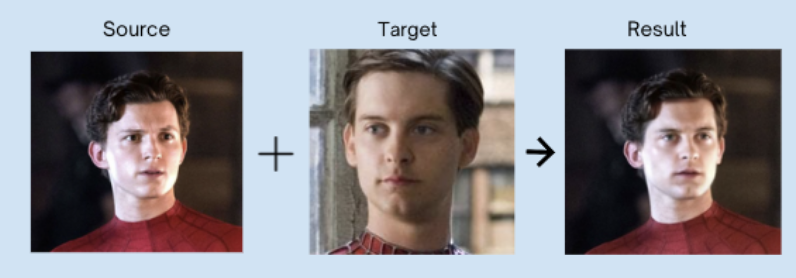
Source + target → result. The fake class, generated one frame at a time. Sequential CNN — four Conv2D blocks (32 → 64 → 128 → 128, 3×3, ReLU) with a MaxPool after each, Flatten, two Dropout(0.5) gates around a Dense(512) head, sigmoid out for binary. Standard shape, no surprises.
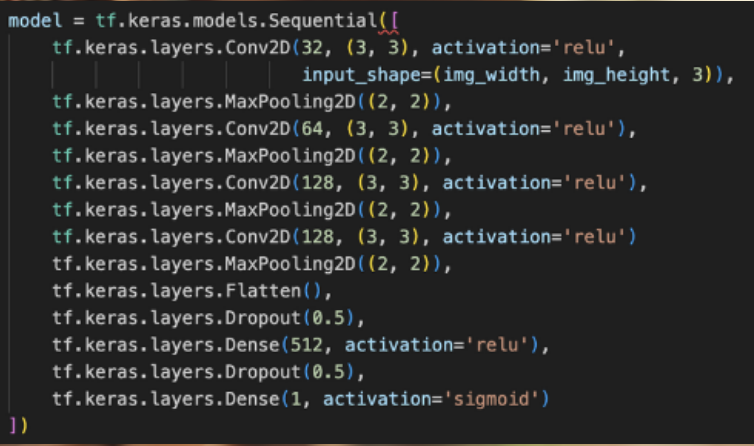
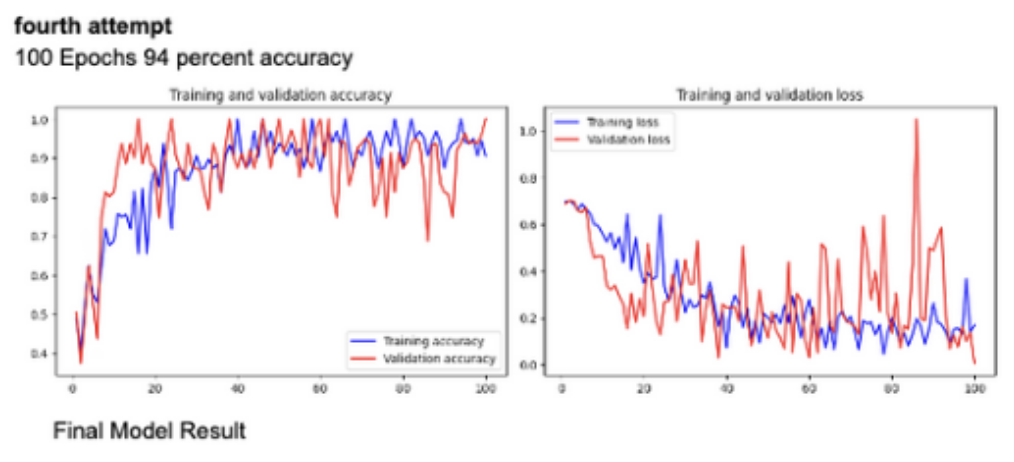
The stack. Input on top, sigmoid verdict on the bottom. 10 epochs landed at 60% — the model was guessing the majority class. 50 epochs got to 75%. 100 epochs on a balanced dataset got to 94%. The architecture didn't move between any of them; only the data and the patience did.
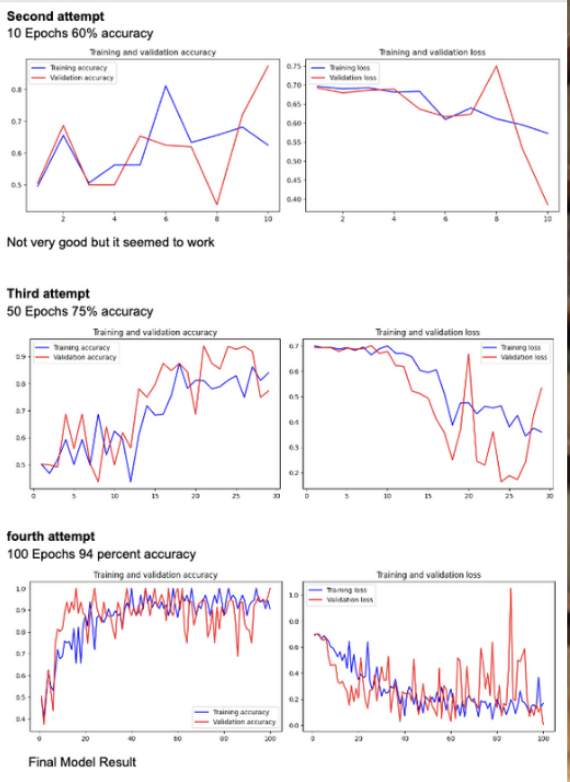
Three runs, same architecture. Different shape of data, different shape of curve. Held-out test pass at ~94% accuracy. A 4×5 grid of unseen faces — two rows real, two rows fake — every cell called correctly at 0.99–1.00 confidence.
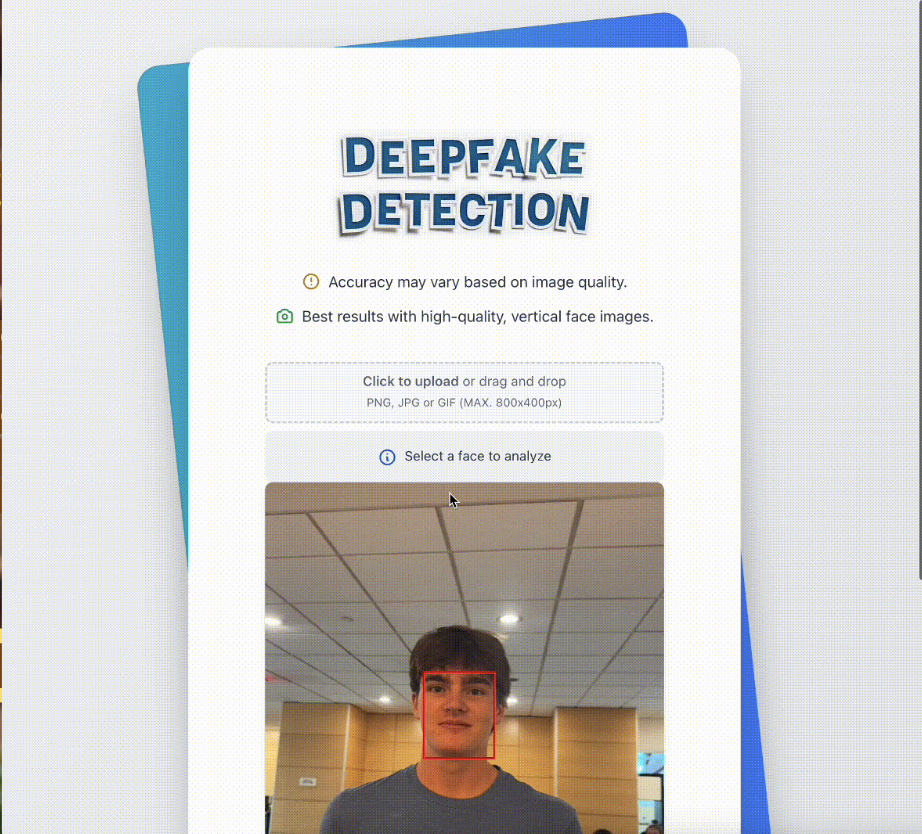
Converted the .h5/Keras weights into a TensorFlow.js JSON folder, dropped them into a React/Tailwind page, and put BlazeFace upstream of the CNN to crop the face out of any uploaded image. Drag a photo into the upload zone, get a verdict in the browser. Pushed to GitHub Pages as deepdetect.github.io.
The shipped page. CNN running in the browser, BlazeFace cropping the face before it ever sees the model.
From the gallery
What I came back with
Lesson from the terrain
The architecture was fixed from attempt two onward — the only thing that moved 60% to 94% was the shape of the data and how long the model was allowed to look at it. Most of the work on a CNN happens before the model is defined: locating a 'real' dataset that's actually real, generating a 'fake' dataset because the public ones don't exist as images, and balancing the two so the loss curve is measuring the thing you think it is. Once those weights existed, they were a few megabytes of JSON the browser could load with TensorFlow.js — the model turned out to be the easy part to ship.