Voice-by-Induction
Inductive audio prototype exploring a coil-and-magnet transducer.
Mar 2026 – Apr 2026 · Hardware / audio · Archived experiment
Stack
Stack: LM386 · TPA3118 · Induction coil · 30 AWG magnet wire · 26 AWG magnet wire · Neodymium magnets · 9V battery · Gemini Live
$34 gift card balance, parts from one order, and a school-day noise floor that was much less forgiving than a quiet room.
Log
The model
The system had four pieces: audio source, amplifier, coil, magnet. Current through the loop creates an alternating magnetic field. The magnet near the ear moves with that field. If it moves enough, the ear hears sound without a normal speaker.
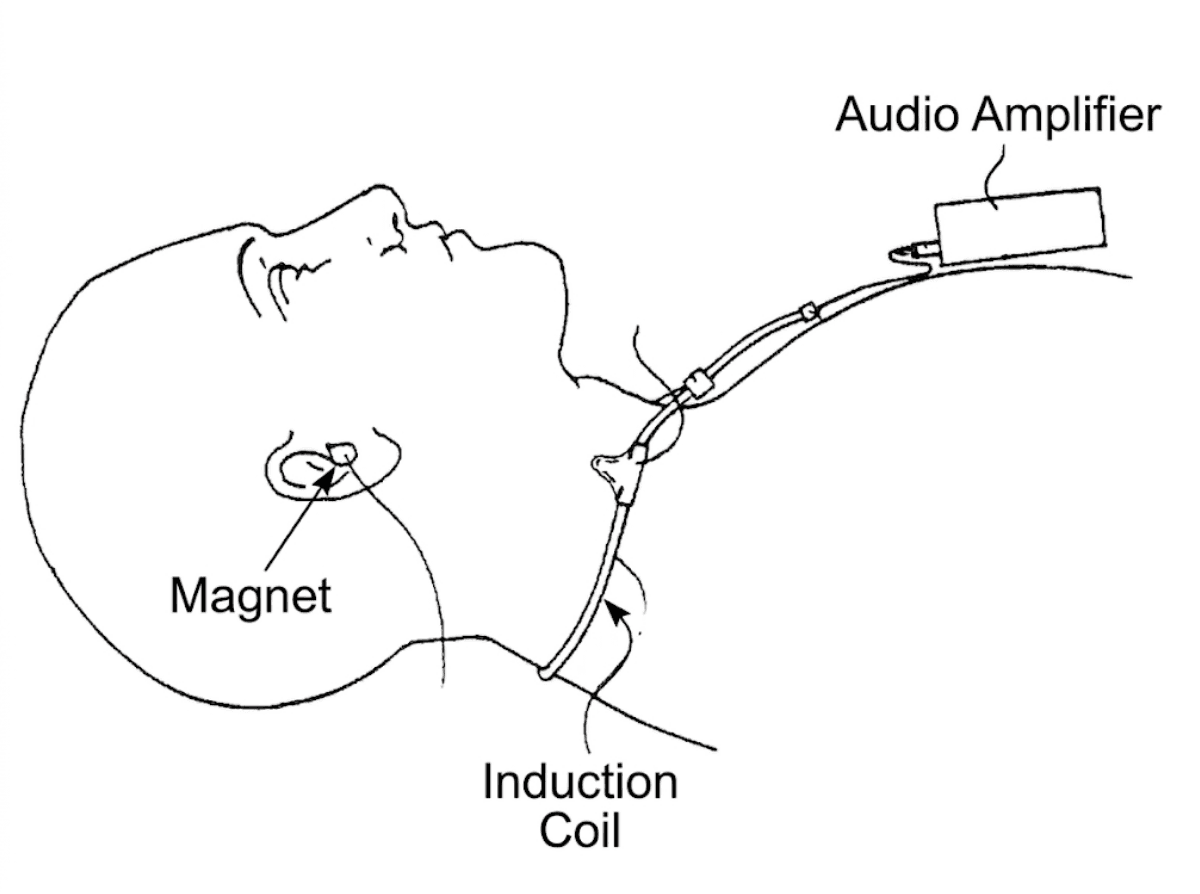
A conceptual diagram of the induction idea, not a record of magnet placement or a validated wearing setup. The cart
The first build stayed inside the gift card: LM386 amplifier module, 30 AWG magnet wire, 5x2mm neodymium magnets, a 9V battery lead, a battery, and an aux cable. It was enough to make the experiment real, but not enough to give it much headroom.
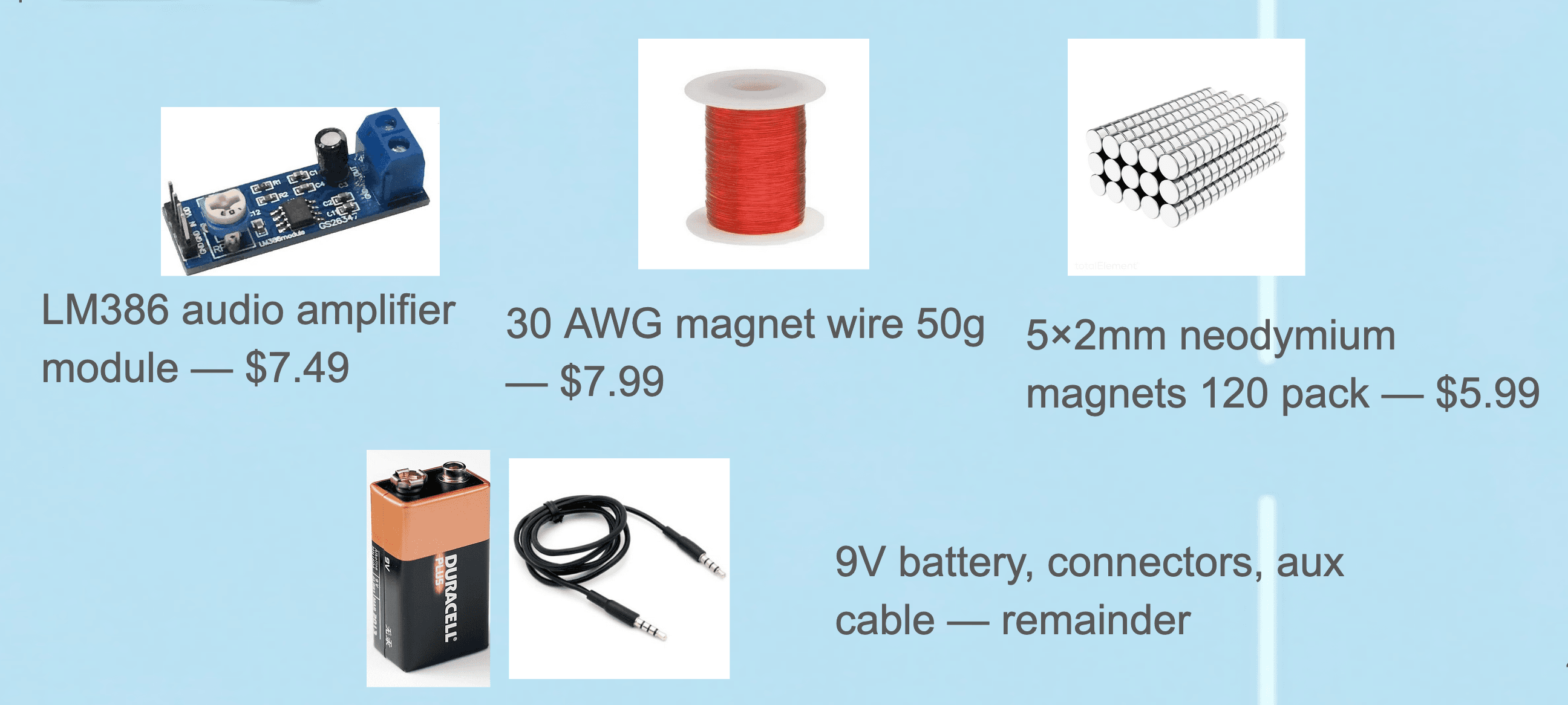
A $34 proof-of-physics order. First sound
In a quiet room, the rig crossed the threshold. Laptop audio into the LM386, magnet-wire loop on the desk, tiny magnet by the ear. Gemini Live became faint but real: not loud, not stable, but present.
The ugly part
Most of the first failures were mechanical. Magnet wire enamel resisted solder, aux cable strands frayed, and exposed copper turned every movement into a new short. This was my first time soldering, so the rough joints were learning attempts; my soldering improved as I worked. Before the physics mattered, the joints had to stop lying.
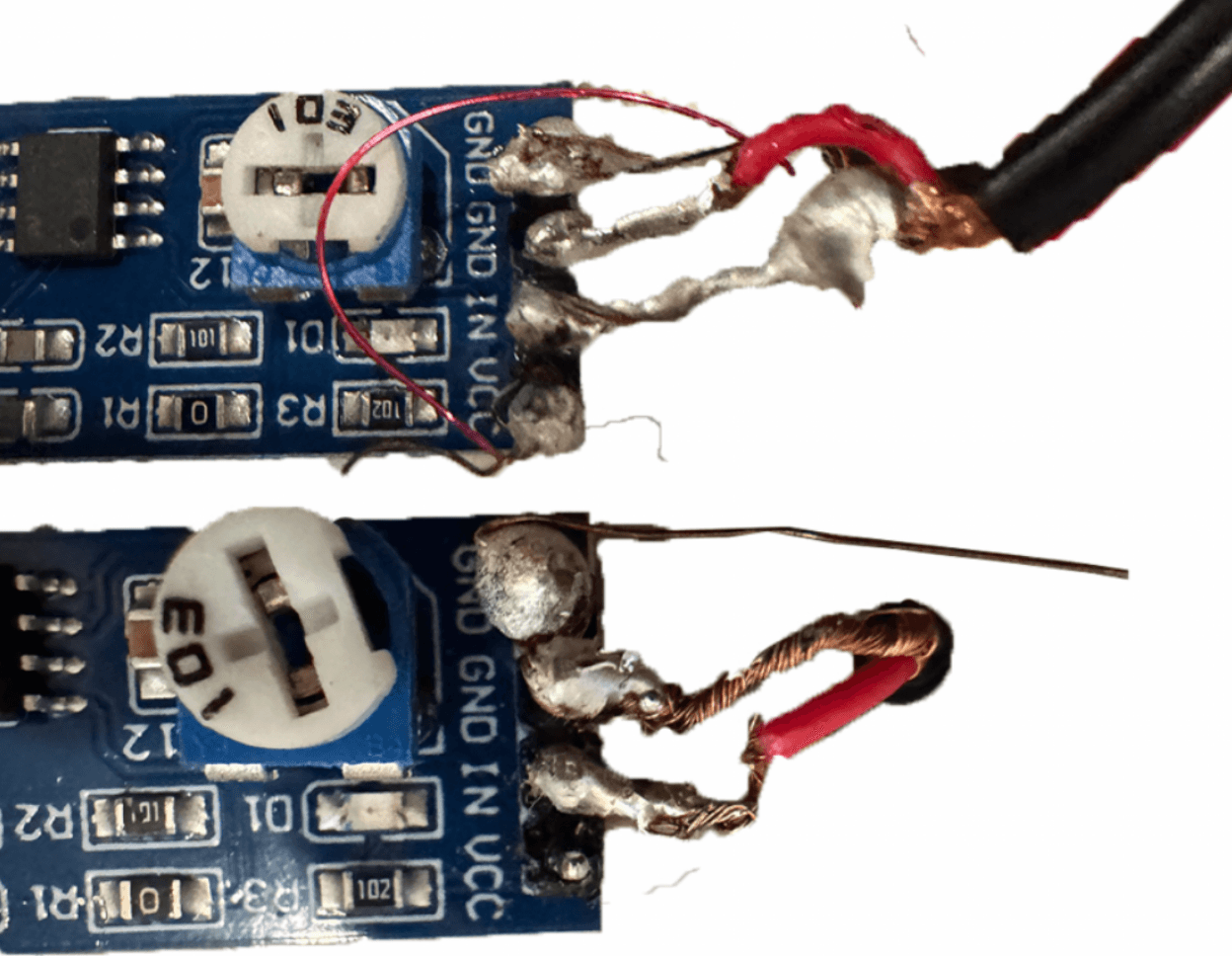
First soldering attempts. My joints improved as I learned. School test
The next day, I compared the LM386 rig in a school hallway. Background noise made it much harder to hear than it had been in the quiet room. Cupping both ears and standing still helped me hear it again; the hallway was simply a louder test environment.
The coil question
I wondered whether adding more turns would help, but I never isolated or measured that change. I kept it as an open question instead of treating it as a result.
Blue smoke
I tried to brute-force the LM386 with more voltage and hit the ceiling the obvious way. The board class was wrong for the job: too little power, too little supply voltage, and no margin for a noisy room.
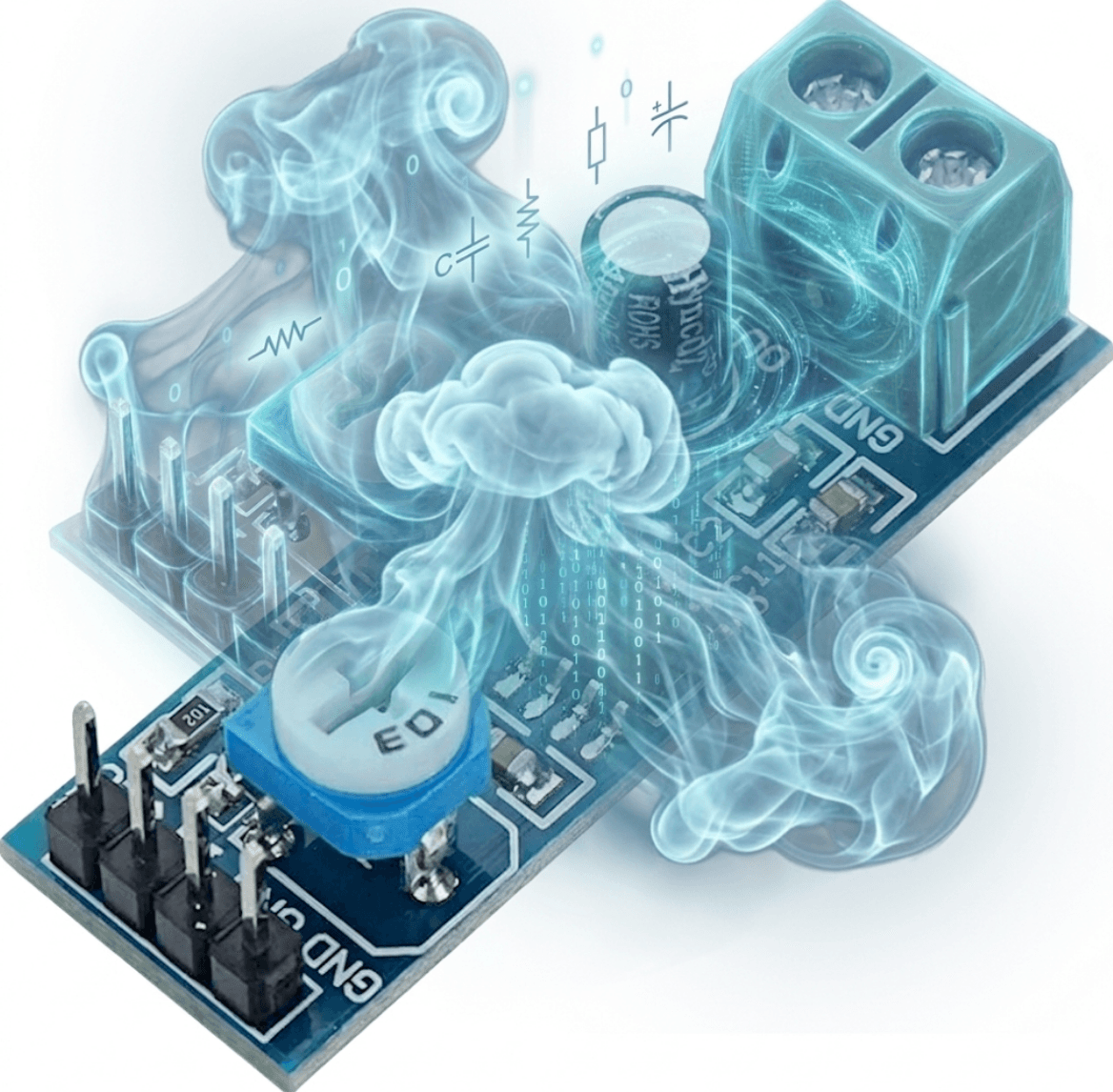
Illustration of the over-voltage failure. The next board
I used both the LM386 and TPA3118 boards with the coil, and the TPA3118 was noticeably louder. The comparison slide shows the boards' listed ratings, but those ratings do not establish how much power reached the coil; I did not measure coil output. Designing and 3D-printing an earpiece to hold the magnet was a possible next step, but I never built it.
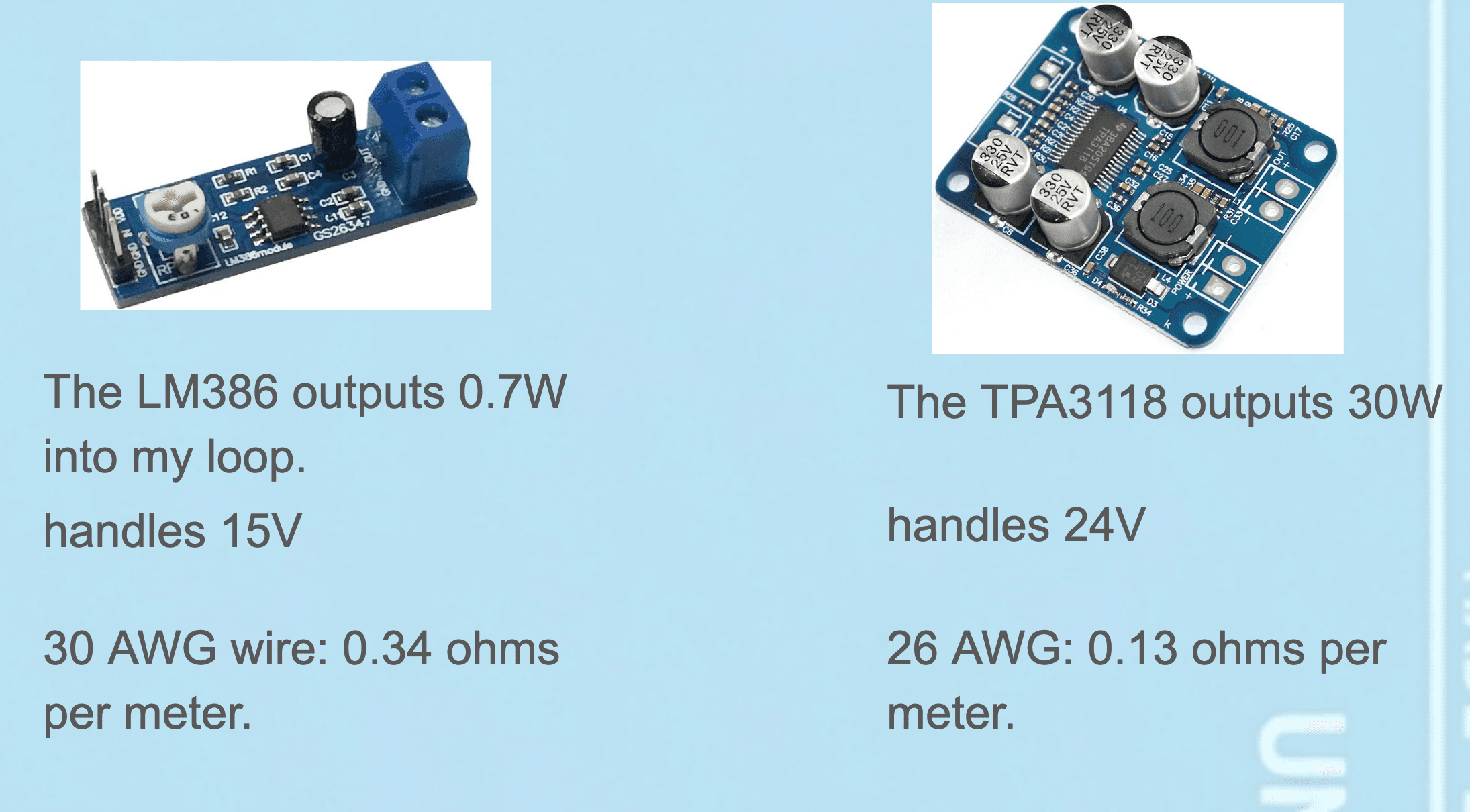
The listed board ratings are not measurements of power delivered to the coil.
Result
Faint audio in a quiet room with the LM386; the TPA3118 was noticeably louder, with no measured coil-output value.
What I learned
The project gave me a real but faint sound in a quiet room, and the TPA3118 was noticeably louder than the LM386. I did not measure the coil output, so the boards' ratings could not tell me what the coil actually received. The clearest result was the one I could hear: changing amplifier boards made a noticeable difference.